Breaking Barriers, Building Health: Dr. Nina Ford Johnson
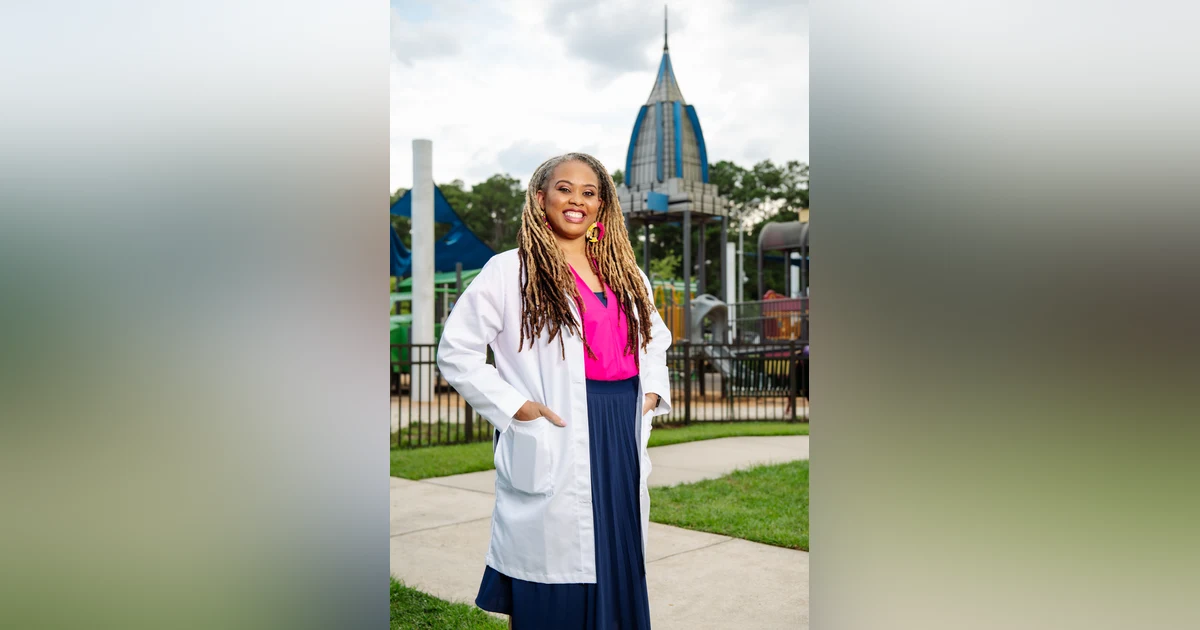

She was sworn in as the first pediatrician to lead the Medical Association of the State of Alabama in 20 years — and only the second woman of color to hold the role since Dr. Regina Benjamin, who went on to become U.S. Surgeon General.
In this episode of Living It Up with Lenise, Dr. Nina Ford Johnson opens up about the moment her father administered her oath of office, the physician shortage reshaping care across Alabama, and why she believes "if you are not at the table, you are the meal being served." We talk infant mortality, rural healthcare access, the billion-dollar conversation around weight and GLP-1s, and what it means to raise three kids while leading a statewide medical association.
Dr. Johnson shares the loss that first pointed her toward medicine, the mentor who told her she could do it when she doubted herself, and the one health habit she'd prescribe to every person in Alabama. It's a conversation about service, legacy, and remembering that everybody is somebody's child.


 RSS Feed
 When you strip away prestigious titles and professional roles, who are you at your core? In this powerful episode of Living It Up with Lenise, Lenise Ligon sits down with pediatrician Dr. Nina Ford Johnson, the newly installed President of the Medical Association of the State of Alabama (MASA). As only the second pediatrician in two decades to head the state’s largest physician organization, Dr. Johnson shares her deeply personal journey from the Midwest to leading statewide health policy.
Together, Lenise and Dr. Johnson discuss the heavy realities of rural healthcare access, the emotional toll on pediatricians facing infant mortality, navigating weight conversations with young girls, and why every leader must speak up for those who can’t vote. Plus, stay tuned for a lighthearted Lightning Round covering favorite Mobile, Alabama dining spots, life advice for new parents, and the transformative power of a daily walk!
Key Timestamps & Highlights
-
Introduction & welcome
-
Defining yourself beyond your professional titles and roles
-
Dr. Johnson’s historic election as MASA President and taking the oath
-
Why pediatrics is 85% education and 15% clinical intervention
-
Journey from Tennessee State University and Meharry Medical College to medicine
-
Unpacking the Alabama KIDS COUNT Data Book & tackling infant mortality
-
Bringing a pediatrician’s lens to statewide adult healthcare policy
-
The rural doctor shortage, medical liability, and healthcare access in Alabama
-
Standing on the shoulders of trailblazers like Dr. Regina Benjamin
-
A day in the life: Balancing clinic charts, family, and ministry
-
Dr. Johnson’s #1 health instruction for every Alabamian: Just Walk
-
How to approach body image, weight, and self-love with young girls
-
The Lightning Round! (Favorite Mobile eats, new parent hacks, & beach surprises)
Notable Quotes from This Episode
"If you are not at the table, you are the meal being served. You are given a seat at the table for a purpose, so you must speak up."
— Dr. Nina Ford Johnson
"When I sit at those policy meetings, I bring my patients with me—the child with cystic fibrosis, the child with a cleft palate, the child with sickle cell disease. My voice is there to represent them."
— Dr. Nina Ford Johnson
"Whether it’s a 5-year-old patient or an 85-year-old adult, everyone is somebody’s child. Once we remember the child in all of us, our community will be healthier and kinder."
— Dr. Nina Ford Johnson
Resources & Links Mentioned
-
Medical Association of the State of Alabama (MASA): alamedical.org
-
Meharry Medical College: mmc.edu
-
Alabama KIDS COUNT Data Book (VOICES for Alabama's Children): alavoices.org
-
Featured Mobile Restaurants: The Dumb Waiter & Bob's Diner
Connect & Subscribe
-
Follow Lenise Ligon on Instagram: @leniseligon
-
Watch FOX10 News: fox10tv.com
-
Subscribe to Living It Up with Lenise: Available on Apple Podcasts, Spotify, or wherever you get your favorite shows.
If you enjoyed this episode, please leave a 5-star rating and review! It helps more listeners find the show.
1
00:00:00.000 --> 00:01:00.000
Lenise: So, you know, just as we are welcoming people into the, the podcast, if you could please introduce Dr. Ford: yourself. Yes. Thank you, Lanice. I'm so glad to be here with you. Uh, my name is Nina Ford Johnson, a pediatrician, wife, mom of three awesome, rambunctious children And, uh, president of the Medical Association for the State of Alabama, um, a very blessed opportunity to serve doctors in our community- [NARRATION — TRACK A] A quick note for anyone listening from outside Alabama: the Medical Association of the State of Alabama — MASA for short — is the largest professional physician organization in the state, representing thousands of Alabama doctors and serving as their voice in Montgomery and beyond. Lenise: Mm-hmm Dr. Ford: where Lenise: we live. So that's, that's a mouthful. Um- Yeah ... you're a mother, you're a wife, you're a pediatrician. You hold these prestigious roles. I'm not quite sure where to start. Dr. Ford: Yeah. Lenise: That's a good question. You know, because... Yeah, 'cause Dr. Ford: I Lenise: think- That's a good Dr. Ford: statement, rather ... Lenise: well, I think a lot of times when people, um,
2
00:01:00.000 --> 00:02:00.000
try to define who they are, uh, they, they automatically go into the roles that they carry. Mm-hmm. And if those roles were stripped away- Dr. Ford: Hmm ... Lenise: who would, who would you be? Dr. Ford: Ooh, that's so good. I'd be someone who loves people, who loves to serve. Um, I love to read. Hmm. I love, uh... Yes, I did read the book, and it was amazing. Lenise: No, and I, and I read your book, and it Lenise: Yes. Absolutely. It was like, it was like the, the blooming onion that I never knew I needed. Dr. Ford: Right. Absolutely. Absolutely. Lenise: Mm. Dr. Ford: We both read some good books, didn't we? Lenise: Yes, yes. Yeah. Recommendations- Yes ... on one another. But yes, uh, you love to read. Dr. Ford: Yes, yes. It, it allows me to escape. Lenise: Mm-hmm. Dr. Ford: Yeah. Lenise: Mm-hmm. Yeah. Dr. Ford: Yeah, so, um, I love to travel. I just, like, you
3
00:02:00.000 --> 00:03:00.000
know, good conversation, good food, all the, all the things. Yeah. Lenise: Mm-hmm. So getting back to the roles. Mm-hmm. You were sworn in on April 10th at the annual meeting. A mobile pedi- pediatrician now leading the largest physician organization in the state. I'm gonna ask you the same question I asked you on the newscast, because I think this is just extraordinary. If you could please take us back to the moment that you realized what was actually happening, and what was going through your mind when, when you heard that announcement? Dr. Ford: You know, it was, um, it was something I've been preparing for, uh, for, for several years. But... And I think just taking it all in stride, taking it, uh, day by day, but also knowing there were so many other things that needed to be taken care of. So it wasn't until that day that I
4
00:03:00.000 --> 00:04:00.000
could fully, like, um, appreciate the moment. Mm-hmm. And I had brought my, my parents came in town, my sister, and sh- of course she was just crying and... And my dad gave me the oath, and I thought that was so important and poignant, because my father, as an educator, he was my most important teacher. Mm-hmm. And so having him there, but also having my children there to see, uh, what they could achieve, and of course do more, and meet other physicians, and see what that we're there advocating for them and children like them, that's, uh, that's so important. And so, um- It, it's nothing that I let go to my head because it's a, it's a platform where I feel like I can serve people more. It's a
5
00:04:00.000 --> 00:05:00.000
ministry, right? Mm-hmm, Lenise: mm-hmm. Dr. Ford: So just like what you do every single day, Lanice, how you can show other people, um, A- young African American girls, or not even just that, just people, young people, children, period, that, oh, look what she's doing, and she's doing it so gracefully and so beautifully, and she's serving her community by giving us great information with a smile, but sometimes difficult information as well, but we can always depend on her. You know, that's something that's, um, that can, that should be commended, and it's a way just to serve. And I think if we look at what we do as a means to serve people and to serve others, uh, it would take away, you know, some ego and some of the other things. Lenise: Mm-hmm. Service, um, is a theme that I'm hearing from you-
6
00:05:00.000 --> 00:06:00.000
Yes and, and being an educator, so, uh, those two tie well with pediatrics. Absolutely. Was, was that always the plan, or did something happen in that training that led you towards children? Dr. Ford: You know, um, it was not always the plan. Now, I knew I either wanted to be a teacher or a physician or a doctor, and, um, my dad was like, "Well, why don't you just be a doctor?" And I was like, "Okay, that's easier said than done, of course." Mm-hmm. But he was the one to always push me, and, um, but a lot of what I do as a pediatrician is education. Mm-hmm. And, uh, and, and I appreciate that because I want parents, and not just parents, but k- uh, uh, grandparents and aunts and uncles and all the caregivers to realize that they are, um- But they're
7
00:06:00.000 --> 00:07:00.000
important, that they are the caretakers of their child's health, and they have such a huge responsibility in giving them that power and realizing that they have the power, uh, to help with their children's health. But not just their health, but their education and their social wellbeing and all other types of things associated with it, that it all goes together. I tell everyone that pediatrics is 80% edu- 85% education, 15% of what I actually need to do. And so once I empower them, and I hope they leave empowered, then that would, uh, really just, uh... I think I've done my job well. Lenise: Mm-hmm. I wanna talk a little bit about your education. Mm-hmm. Um, you're, you're a fellow Midwestern kid. Oh. Uh, so, so we share that. Yes. Indiana, Michigan. Yes. Um, but you went to Tennessee State. Dr. Ford: I did. Lenise: And, and, um, I guess y-
8
00:07:00.000 --> 00:08:00.000
Talk to me about your educational journey and, and how- Yes that shaped who you are as a physician and a leader. Dr. Ford: Yeah. Good. Good. Um, when I was, uh, at Tennes- in Indiana, we had great, uh, school system. Uh, it was one that was, it was very, uh, challenging. And then when I was 15, my parents moved me to Stone Mountain, Georgia, and it was a culture shock for me. As you can imagine. And Lenise: I love how you said that. I love how you said that, "My parents moved me." Dr. Ford: Yes, they did. 'Cause I did not go willingly. And so, uh, but it was such a culture shock, but it was necessary, so... 'Cause when I got to Tennessee State University, um- It was such a great place that fostered, uh, camaraderie, uh, amongst my, uh, classmates and cohorts to the point where
9
00:08:00.000 --> 00:09:00.000
my roommate, uh, she was like, "I wanna be a lawyer." And I was like, "Well, I'm gonna be a doctor." And that's exactly what happened. Speaker 3: Yes. Dr. Ford: And yes, and now she's the, what, deputy county mayor for her, for her city- Mm ... in, uh, Tennessee, and the godmother of my children. And, and the- our other best friends are, are physicians. And I mean, because we grew up, we... It was no competition. Lenise: Mm-hmm. Dr. Ford: And it fostered, um, learning and a great environment, um, where we were very well-supported. And then going to Meharry Medical College, um, one of the people who I will forever be indebted to is Dean Pamela Williams, um, who has, uh, gone on, uh, who has passed on to the other side. But she really imparted, um, she let me know that I can do it. [NARRATION — TRACK E] If you're not familiar with Meharry Medical College — it is one of the nation's oldest and most respected historically Black medical schools, training physicians in Nashville since 1876. So when Dr. Johnson tells you she was president of her freshman class there, understand the company she was keeping. Yeah. And it was there when I became freshman class president of the largest entering
10
00:09:00.000 --> 00:10:00.000
class of Meharry Medical College, and I was not expecting to be in that role, but it was the more I was there, it was the more of the environment, "Yes, you can do it." And- Mm-hmm ... you know, I wanna be a... At first, you know, I wanted to be a, a cancer doctor because that's why I wanted- Mm to go into medicine, 'cause I saw my uncle pass away. But then I, um, became a Sunday school teacher, and there was Destiny, a child with Down syndrome, and, um, who really took to me and I took to her. And my co-Sunday school teacher was like, "Why don't you get into pediatrics?" I'm like, "You know what? You have a good point. I love children." And- ... and ever since then, that's what, you know, led me on my journey, so very grateful. Every- Beautiful ... all things work together, I'll say that. Very, yes. Lenise: Absolutely. Mm-hmm. What type of cancer did your uncle pass from? Dr. Ford: You know what? It was a stomach cancer. He had, he worked in, um, like of course, as
11
00:10:00.000 --> 00:11:00.000
you know, across, you know, Michigan, Indiana, a lot of car- Mm plants, a lot of those. Detroit. Yes. And that's what he did, and he worked with chemicals, and they're thinking that's why, 'cause he passed maybe in his 40s. Mm. So not, not too old. And so, um, but to see him as, you know, he was tall and full of vigor and life and loved Prince and all, you know. He was a great guy, and then to see him get decimated by that. Speaker 3: Mm. Dr. Ford: And I came to that, you know, to that point on that day. I said, "I wanna help as many people as possible, so I either, one, wanna become a teacher, or two, become a physician." And that's what led to, you know, going that route. Lenise: And you did both. Dr. Ford: Yeah. Great. Thank you, Lanice. Thank you. Yes. Lenise: I wanna talk about the, um, the 2025 Alabama KIDS COUNT Data Book. Dr. Ford: Okay. Let's talk about it. Lenise: Um, because I'm, I,
12
00:11:00.000 --> 00:12:00.000
I have mixed emotions. I have some concerns- Mm-hmm ... and I'm also encouraged by, uh, some things that we're seeing. So infant mortality rates are down. Sure. Mm-hmm. Reading scores are up. But the child poverty level, um, has increased in children under 12, and so that gets me to wondering about abuse or neglect, um, because we know that those rates also went up. You have so many, um, challenges that you will have to address in this new role, and I'm not even talking about, uh, obesity rates, because I do wanna touch on GLP-1s as well. But with all of that, going back to the Alabama KIDS COUNT data, as
13
00:12:00.000 --> 00:13:00.000
the president, where do you focus first? Dr. Ford: Good question. Um- And I think as president, we have to wear many hats. Lenise: Mm-hmm. Dr. Ford: How can I support, uh, physicians to make sure their voices are being heard and their cares and making sure that they are able to practice medicine to the best of their ability while taking care of vulnerable populations, whether it be in urban settings, suburban settings, or even rural settings, where the access to care in Alabama, as we have seen over the years, has definitely gone down. What can we do, um, to help facilitate, you know, taking care of those physicians while also making sure that our communities are not being forgotten about and taken care of? And that's a difficult hat to wear, uh, several hats to juggle
14
00:13:00.000 --> 00:14:00.000
at the same time. Lenise: Mm-hmm. Dr. Ford: Uh, that data is, uh, alarming. I'm glad to see that infant mortality rate is going down a little bit. But I'll be honest with you, uh, in 2026, and we're just in May, I've had two infant deaths so far in my office. And, um, so it depends on... But one is too many. Lenise: Right. Dr. Ford: Right? One is, o- one is way too many. And we've got to tackle the socioeconomic status, uh, the socioeconomics of our population because that affects, you know... A lot of those populations are being covered by government assistance. Lenise: Mm-hmm. Dr. Ford: And, um, and so, and then their access to care, not just of the, the children, 'cause those children are
15
00:14:00.000 --> 00:15:00.000
usually taken care of, but then, one, their parents, and then grandparents, and even great-grandparents are s- taking a role in taking care of children. What about their own healthcare? Mm-hmm. What kind of healthcare are they receiving as well? And then, uh, the fine balance of do I pay for my medicine or do I go get groceries or- Mm ... you know, my child needs, these children need clothes or food and, and, and electric, uh- Mm ... turn on the power. And so it's a lot to navigate. My husband, um... Go ahead. Go ahead. Lenise: Well, I, and I don't want to take away from the pain of a parent, but when you just said that you had two mortalities in your office, it just- Correct ... it, it struck me because you're, you're thinking of the moms and the dads and, and the family, but you're not- Dr. Ford: Absolutely Lenise: thinking of the pediatrician
16
00:15:00.000 --> 00:16:00.000
Dr. Ford: Oh, that was, it was tough. Ah. It was tough. Yeah. Um, my husband is now my office manager, and when the first death happened, um, I think it was January- Lenise: Mm ... Dr. Ford: he said he, he could not sleep for- Oh ... a couple of days 'cause all he kept thinking about was that baby. Lenise: Mm-hmm. Dr. Ford: And, um, it was really tough. It was really tough. And then when I told the staff, one staff member just immediately left out of the room. Lenise: Mm-hmm. Dr. Ford: Um, 'cause that's hard. Mm-hmm. And, and so we think about those parents, and we think about, you know, those families, and that's why, you know, when I counsel parents about, you know, "You have to do this, you have to do that," a lot of times I don't have time to give them the reason why I say it. Lenise: Mm. Dr. Ford: Um, but on occasion when I've had to give them the reason why, then they say, "Oh, okay, we get it
17
00:16:00.000 --> 00:17:00.000
now." Lenise: Mm-hmm. Dr. Ford: Um, 'cause you don't want- Listen to Lenise: your doctor. Yes. Dr. Ford: Yeah. 'Cause you don't want that to be you. Lenise: Mm-hmm. Dr. Ford: Or, or, you know, or, you know, you s- sort of speaking in terms of the family. So, um- Lenise: Yeah ... Dr. Ford: that can be challenging. But then, you know, you just keep on going. Lenise: Hmm. Most medical association presidents come from internal medicine or surgery. You're a pediatrician. How do you think that changes the lens, um, to what you're bringing to statewide health policy, especially when we're talking about adults? Dr. Ford: Right. Right. And so I think it, it really, really helps. The last, uh, pediatrician was, um, 20 years ago, and her name is Dr. Martha Rollerson. She's out of Brewton. She's a
18
00:17:00.000 --> 00:18:00.000
stand-up, you know, she takes politicians and legislatures and everybody, you know, straight on, uh, with what she believes are doing well for children. And if you take care of children, you take care of your community. [NARRATION — TRACK B] Some context here: Dr. Johnson is the first pediatrician to lead the association in two decades. The last was Dr. Raulerson, who served as president back in 2006. Twenty years between pediatricians at the head of the table — that's part of what makes this moment historic. Mm-hmm. And if we start seeing that children are not just the future, they're the now- Lenise: Mm-hmm ... Dr. Ford: a healthy child, a healthy child also shows a healthy community. And so what I did, and as a reflection of what she did 20 years ago, is our last board meeting, I gave each board member a card of a child to let them know- Mm-hmm this is why the reason we're here. Lenise: Mm-hmm. Dr. Ford: And, um, I talked about that child, and I let them know that this child has this condition, and because they have this condition, they also see a bunch of other specialists, and some of those specialists are not, uh, in Mobile. They may be in Birmingham, and there's only,
19
00:18:00.000 --> 00:19:00.000
you know, one department in Birmingham, and it can be a six-month waiting list to get in. But this is where we are, so, um, allows them to know that we're just not here for, you know, physicians or for ourselves. We're here for a greater good, and let's remember the children. Children can't vote, so somebody has to speak up for them. Lenise: Yeah. I'm glad you mentioned having to go outside your immediate community for a specialist. Uh, do you think that there are enough doctors choosing to practice here or, or even in rural communities? And If not, why? Dr. Ford: Ooh, that's, that is such a loaded and great question. Uh, there are not enough physicians here. Hmm. There are not enough physicians. I was looking at some data that we were able to collect, and there's even, uh, I'll say this, plastic surgery has over
20
00:19:00.000 --> 00:20:00.000
50% of their doctors are over the age of 60. And there are other specialists who are the same as well, and they said they are unable to recruit physicians to come to Alabama, one. And, uh, we have to talk about this, and it's a painful subject, but the tort reform. We are getting nuclear verdicts, uh, against physicians where, um, one verdict recently here in Mobile was a $50 million verdict against one physician that literally cripples his hands on everything, but not just him, all of the physicians in his practice as well has crippled them. Hmm. So the ones who are young, guess what? They're out of th- they're out the door. They're leaving. Right. They're leaving Alabama. And so we've got to talk about that. We've got to talk about, uh, state and income tax and things of that nature as well. Um, a rural health tax credit,
21
00:20:00.000 --> 00:21:00.000
very important for our rural physicians who choose to practice in places, um, like Demopolis or, or Rogersville or Harleyville or all the other smallvilles, uh, littered throughout our state. We have, uh, vulnerable populations there. There's no way that a, a mother, uh, a woman who's expecting and having a child should drive an hour and a half to have a baby, but we see that, and we see it on a daily basis. That's scary. [NARRATION — TRACK F] Investigative reporters across this state have documented what that drive really looks like — mothers in labor passing shuttered rural hospitals, entire counties with no labor and delivery unit at all, just distance and the hope of making it in time. In August 2026, Alabama took its first major swing at that problem: Governor Kay Ivey announced 138 grants, totaling more than $144 million, under the new Alabama Rural Health Transformation Program — funding rural workforce, mental health access, and hospital infrastructure across nearly every county. It's a start. But funding alone doesn't solve the harder problem — convincing physicians to actually move here. Lenise: Mm-hmm. Dr. Ford: So, mm-hmm. Dr. Ford: Ooh ... Lenise: moving here. Um, Dr. Ford: For sure. Lenise: Change, change of pace. But there is such beauty here. Dr. Ford: Ooh, yes. Lenise: Um, and I think that if people knew that, maybe that would be one enticement. But it is difficult because we're sandwiched
22
00:21:00.000 --> 00:22:00.000
between New Orleans and Atlanta. Right. And then you also have Birmingham. Dr. Ford: Right. Lenise: That's gonna be a tough order to fill, getting doctors here. Dr. Ford: It, it is. It is. So we have to do, I think as a community, as a state, we have to do better marketing. Mm. Who, uh, who... I would love... The beach, the beaches here are beautiful. The food is amazing. And then you can go six hours up and see mountains. That's, that's, um, that's gorgeous. Um- Mm-hmm ... so who, what other, not many other states can s- give that same report. Or the people are, when you get to know them- Mm-hmm ... are just so kind, and they invite you into their lives, into their home, just like family. I don't have any family here, Lynese. Mm-mm. And I'm sure you don't... Exactly. But I'm sure you, as you know, you are so loved and cherished by this community here. And I believe once physici- physicians come here,
23
00:22:00.000 --> 00:23:00.000
that would play a major role, where now the Medical Association is boosting up our, um, marketing for our international medical graduates. A lot of them come to practice in underserved areas, and they take care of a lot of patients here in Alabama. Mm-hmm. But there's been some things out in the news and in, and in the political arena that has them uncertain about their, um, occupations, um, working here in Alabama and in this country. But we need more physicians. Lenise: Mm-hmm. Yeah. As, as a whole. Dr. Ford: As a whole. As a whole. And, um- Because when my loved one gets sick, and, and this is why we give good care, because we know what goes around comes around. 'Cause my- like, your family is not here. Like, I wanna care for these children as the best way I can so when my mother gets sick or something may happen to her in Georgia, I can feel confident that the care I've given will come back to
24
00:23:00.000 --> 00:24:00.000
her, and she'll get excellent care as well. Lenise: That's right. I wanna change gears and talk- Yeah about something that may be very easy for you. Dr. Ford: Okay. Lenise: Because you are a trendsetter. Dr. Ford: Oh, you're kind. Lenise: You have now served as president of Mobile County's Medical Society- Correct ... and the president elect of the organization before that role. Dr. Ford: Yes. Lenise: Did I get that right? Dr. Ford: Yes. Lenise: Okay. So that's a long road in medical leadership. Dr. Ford: Sure. Lenise: And I, I'm curious, what moments along the way did you feel as though you had to work harder to be taken- Hmm ... seriously, and how did you handle that? Dr. Ford: You know what? There are great trailblazers who came before me, and they've already started to, uh... They already took a lot of that, um, difficulty, uh,
25
00:24:00.000 --> 00:25:00.000
before me. So, uh, the first African American, uh, president of the Medical Association of the State of Alabama, uh, is Regina Benjamin And she has told me, like, "Look, if you have any problems- ... let me know." [NARRATION — TRACK C] You may recognize that name. Dr. Regina Benjamin made history as the first African American president of the Medical Association of the State of Alabama — and she went on to serve as Surgeon General of the United States. A trailblazer from right here on the Gulf Coast, and part of the shoulders Dr. Johnson stands on today. Lenise: I love it when the sentence starts with look. Dr. Ford: Yes. Lenise: You know it's gonna be good. Dr. Ford: And she still has, of course, as former surgeon general, she still has a lot of political power. Mm-hmm. And her voice means something. Yeah. And so when we step up into the room and we, we're not... And, and I have a saying that goes, "If you are not at the table, you are the meal being served." Lenise: Mm. Dr. Ford: So you are given a seat at the table for a purpose and for a reason, so you must speak up, and that's why, you know, I feel that God and, and... No, I make no qualms about that. He qualifies us for this. Lenise: Yeah. Dr. Ford: Yeah. Uh, we have the ability to talk and, and
26
00:25:00.000 --> 00:26:00.000
say the things that are important to us because we're given a seat at the table for a reason. And so I didn't necessarily have to work too hard. Uh, of course, just working hard in general to, you know, of course, during, making sure my education, uh, when I was in school, making sure those grades were great. That was challenging, more challenging than these roles have been. And so I believe that when, um, I'm sitting at the table, I'm taking on, like, my, the patient that I have cystic fibrosis, I take them with me to the table. I take my children who have cleft lip and cleft palate, or who have severe asthma or who have sickle cell. Or, um, there's five or six, you know, kids in the family and they're on, you know, government assistance or whatever. Or, or even the child, you know, who's doing perfectly fine and doing well and is going to excel. Everybody, all those children come to the table with me, and it's important that my voice is heard because I'm
27
00:26:00.000 --> 00:27:00.000
speaking up for them. Lenise: Hmm. I love that. Dr. Ford: Thank you. Lenise: Speaking of utilizing your voice and not taking your talents for granted, what do you want young Black women in medicine or young girls in Mobile who are dreaming of becoming doctors to know? What should they take from your story? Dr. Ford: That anything is possible, that they can do it, and not just do it, but do it better than I have, and that's what we want them to do. And that, uh, whatever you set your mind to, you can absolutely do it. Uh, whatever somebody tells you no, I love when somebody tells me no. Speaker 3: Challenge. Let's go. Dr. Ford: Tell me no. Like, my husband knows the same thing. He's like, "Oh", like, "Okay, I can't tell her no." Like, "She's gonna be determined. Whatever she sets her mind, she is going to do it." And, and
28
00:27:00.000 --> 00:28:00.000
you, everyone else must follow the same route. Lenise: Hmm. Dr. Ford: You're, you're, you're, you can only defeat yourself. That's Lenise: it. Yeah. Dr. Ford: You're the only one. Lenise: What does a typical Wednesday look like for you? Dr. Ford: Ooh. Lenise: Oh, everyone calls it hump day 'cause it's the middle Dr. Ford: of the week- Yeah ... and Lenise: they're so excited, you know, we're halfway through it. But what does Wednesday look like for you? Dr. Ford: Oh, that's great. So getting up at 5:00 in the morning, um, work... I know, yep. Get, terrible. Lenise: Rise Dr. Ford: and shine. Be- rise and shine because I'm getting those charts done, 'cause when I get home I do not wanna do them. I, that's my time for family, that's my time to debrief. Mm-hmm. So 5:00 in the morning doing charts. Uh, I stop at 6:30 to get the kids up and, you know, give them loves and kisses before I head off to work, and get to work, and I pray, and I do some more work. And then I work at
29
00:28:00.000 --> 00:29:00.000
the office from, um, about 7:30 to 12 on Wednesdays. And then in the afternoon I may plan doctor's appointments for myself or other appointments, and then, uh, my husband picks up the kids from school, and he takes the girls to dance, and we get ready for Bible study. He's a u- he's a pastor at a, a local church- Mm ... and, uh, called Midway Missionary Baptist Church in Theodore Dawes area. Beautiful- Great ... sweet people. And so we get a prayer meeting at 6:30, Bible study from 7:00 to 8:00, and then at home by 8:00 and we're getting those kids ready for bed and making sure we got all homework and make sure they read and all the things. And then by 9:00, look, I need to be in bed 'cause I know I've got 5:00 in the morning is coming. So that's kinda how a day, a Wednesday goes for me. Lenise: Hm. Yeah. I heard a lot of prayer and a lot of family
30
00:29:00.000 --> 00:30:00.000
time. Is that how you protect your mental health? Ooh. Because your whole, your whole career is centered on caring for other people. Dr. Ford: Yeah. Yeah, that's good. Yes. Prayer helps a lot. Now I'll be honest, Lynese, I didn't pray as much as I did until I had children. Oh, Lenise: wow. They bring it out of you. Dr. Ford: Ooh, yes they do. Lenise: For all the good reasons. Dr. Ford: Ooh, oh, look at that. Lenise: Yes, they do. Dr. Ford: Absolutely. Oh. So yes, that is so necessary, just knowing- Mm ... that I can talk to God at any time and be like, "Look, now..." Talk to him like I'm talking to you. Mm-hmm. Um, and then spending time with family and laughing and, uh, watching, you know, sports or whatever. That's what I like to do with my son. Um, Dr. Ford: So- I'm so proud. Yeah. Lenise: I have a question. Dr. Ford: Yeah. If, Lenise: if you could
31
00:30:00.000 --> 00:31:00.000
give every person in Alabama one health instruction, the one thing they should do, what would it be? Dr. Ford: Ooh, just one? Lenise: Mm-hmm. Dr. Ford: Walk. Lenise: Like- Dr. Ford: Yeah ... Lenise: okay. Dr. Ford: I think walking. I think that's great. Um- Lenise: Mm-hmm ... Dr. Ford: walking, and that's what I tell my moms who've just had babies and they feel like they're stuck in the house. I'm like, "Go for a walk. Like, look at the trees. Listen to the birds. Look at some green things. Look at life. Look at the sun. Let that sun give you some of that natural vitamin D." It doesn't have to be long. And when my, I tell my children, you know, who I'm concerned about their weight, one of the thing, I'm like, "Just walk. Go, like, outside of school, school hours, you and the family, y'all just go for a walk for, like, 30 minutes three times a day. And that's a perfect time for you, Mom, to walk with them so you can discuss, you know, 'Hey, what went on in school today? Let's talk about relationships.'" I mean-
32
00:31:00.000 --> 00:32:00.000
I think walking is just so powerful. Like, after my conversation with you, I'm gonna walk and get some breakfast this morning. Yeah, that sounds- Hmm that does sound Lenise: really good. Doesn't it? Yes. Dr. Ford: The Dr. Ford: Absolutely. Lenise: That is, that is great advice. Dr. Ford: Yeah. Lenise: And, and I, I do wanna ask you about this, because I am concerned about the conversation of weight and where- Yes it's taking our country. Um- What concerns you? Dr. Ford: Oh, I have a lot of concerns about weight, and it's something that has to be approached so gingerly. Lenise: Mm-hmm. Dr. Ford: Um, because I don't wanna think that... I don't want someone to think I'm shaming them- Mm-hmm ... or changing who they are or saying if they lose weight, they'll look, you know, better or whatever. Um, 'cause I, I just want them to be a healthier version
33
00:32:00.000 --> 00:33:00.000
of themselves, and so they can live long lives. And so weight, um, has to be approached very, very gingerly. And a lot of times, and I told a college student that was shadowing me this week, I said, "It's s- it's about planting seeds." So I plant a seed, um, that, you know... And, and the Bible says, you know, you plant the seed and God... Somebody will water it and God will give it increase, right? Mm-hmm. So I plant the seed. Well, let's talk about this, you know, a little bit here, and then the next visit I can talk a little bit more about it, so planting more seeds or watering it a little bit. And so, um, weight has really been... But... And sometimes it's good because, you know, you wanna... You know, losing weight, you know, that's important and especially if you need to. Mm-hmm. Now, if you don't, then we're talking about something else different.
34
00:33:00.000 --> 00:34:00.000
But, um, it's become s- such a billion, I'm sure, billion dollar industry. Lenise: Mm-hmm. Dr. Ford: And, um, and some of it's just, you know, I don't know if it's just the aesthetics and they're looking at social media now and doing this and doing that. It's... And some of it's very concerning and, and I give a girls talk every year, and we talk about, you know... I have a slide that shows different kind of women and their body shapes. Mm-hmm. I'm like, "Regardless what body shape you're in, you still have to love yourself." Lenise: Right. Dr. Ford: It doesn't matter if you gain a whole lot of weight or lose a whole lot of weight. You still have to love yourself where you are. Lenise: When your term ends, what's the one sentence you want to be said about what Dr. Nina Ford Johnson changed in Alabama medicine? Dr. Ford: Hmm. One
35
00:34:00.000 --> 00:35:00.000
thing that she changed is she helped us remember the child. Lenise: Hmm. Dr. Ford: Um, remember the child that's five years old or a baby, but also remember the child that has now grown up to be 85 years old, because that child is still living and stuff too. So remember to remember the child, and once we remember the child or the child in all of us, I believe our community, um, will, will s- be s- successful and succeed and be more healthy and we'll be kinder to each other. Children are generally, for the most part, very kind, especially, you know, the ones when you see in preschool and all. Like, they don't care what you look like. They're giving everybody a hug, right? Mm-hmm. Why can't we do that now? Yeah. 'Cause somebo- everybody is somebody's child.
36
00:35:00.000 --> 00:36:00.000
Everybody is somebody's child. Lenise: That is true. Well, now I am gonna take a sip of my tea 'cause we're heading into the- Oh, good ... heading into the lightning round. Dr. Ford: Oh. Lenise: Do you know what the lightning round is? Dr. Ford: I don't, friend, but I'm looking forward to it. Lenise: Okay. I'm just gonna give you a, a series of questions, and you just answer. Dr. Ford: Okay. All right. Lenise: First question: Best piece of advice for new parents? Dr. Ford: Laugh. Lenise: Ooh, that's good. Dr. Ford: Mm-hmm. Pedi- You've got to laugh. Lenise: Pediatricians versus kid fears of shots, what's your trick? Dr. Ford: Uh, oh, a lollipop after the shots. Your fa- They're a lot Speaker 3: happy. Yes. Lenise: And then you get to send them with their po- with their moms with a sugar rush. Uh, your favorite way to decompress in Mobile?
37
00:36:00.000 --> 00:37:00.000
Dr. Ford: Eat Lenise: One restaurant in Mobile you'd take a guest to? Dr. Ford: Bob's Diner. Lenise: Okay, you can give me two 'cause we don't wanna- Okay ... show favoritism. Dr. Ford: Thank you. Okay. Um, oh, what's my favorite? Oh It's the one, right, it's downtown, uh, The Dumb Waiter. Lenise: What's something about Alabama that people from Indiana still don't understand? Dr. Ford: We have beaches. Speaker 3: Yes. The same for, for Detroit. They're like, "What?" Like, "Yeah, and it's white sand." And they're like, "No." Dr. Ford: Absolutely. Lenise: Oh, okay. Um, uh, let's see here. What did I miss? Is there anything you want to cover that you feel as though, um, we didn't explore? Dr. Ford: No, I just think,
38
00:37:00.000 --> 00:38:00.000
um, we covered so much, a myriad of topics. And, um, this has been so uplifting, and, um, a great conversation. And I think if we just remember, um, that everybody is somebody's child, we would, we would just treat each other better, um, politically and all across. And then I think that could be, like, a common ground we can meet at, 'cause we're just so divided right now. But if we remember that all we want to do is leave this, this city and state and country better for our children- Mm ... then I think we could come together. I think we could, we could really do some great things. Lenise: That's my prayer. Dr. Ford: Yeah. Mm. Absolutely. Yeah, 'cause our k- our kids are gonna have to take over one day, and I want them to be like, "Let's rock it. Let's do this." Lenise: Mm-hmm. Dr. Ford: Yeah. Lenise: Thank you.
39
00:38:00.000 --> 00:39:00.000
Dr. Ford: And I know they will. They have, they have a great mom. Lenise: Well, in you they do. In me. Verdict's still out for Speaker 3: me Dr. Ford: You got one in college. Lenise: Oh my- Dr. Ford: Right? ... Lenise: word, yes, this man. Dr. Ford: What a blessing. Lenise: Yes. Yes, he is. Um, constantly reminds me of my age. Dr. Ford: Oh, terrible. Lenise: He does. "How old are you again? Why are you doing that?" Oh. Dr. Ford: Mm. I'm Lenise: like, "What do you mean exactly?" I know what that means.


