Fairways & First Years: Frances Brown's Journey from Mobile's Greens to the SEC


 RSS Feed
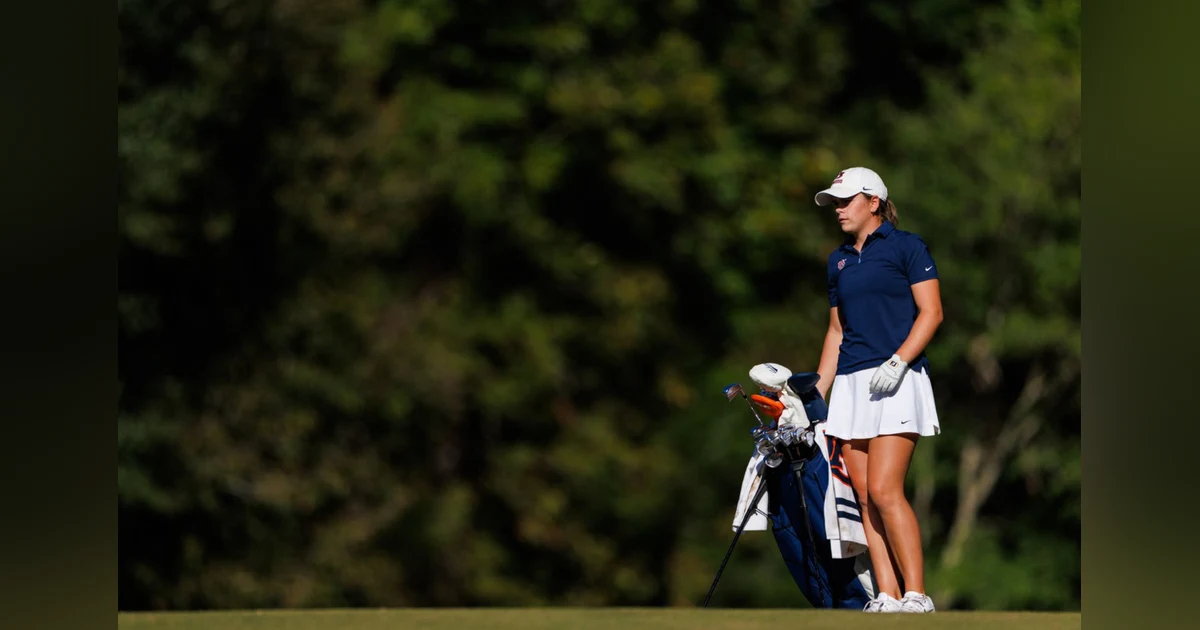
 In this episode of Living It Up with Lenise, we tee it up with Frances Brown — a Mobile, Alabama native who made history as a four-time individual state golf champion before ever setting foot on a college campus. Now a freshman at Auburn University competing in the SEC, Frances brings her A-game and her signature jalapeño humor to the conversation.
We talk about what it's like to grow up literally living on a golf course, the mental discipline it takes to defend a championship four years in a row, and how she's navigating the jump from hometown legend to college athlete. Frances also opens up about her dream round at Augusta National, why she chose journalism as a second calling, and the one philosophy her dad instilled in her that has carried her through it all — just have fun.
Whether you're a lifelong golf fan or you've never picked up a club, this one is for you. Frances Brown is the real deal, and her story is just getting started.
HOST: Basketball, football, and soccer are my favorites to watch, perhaps because of my dad. I can remember going to the Dearborn YMCA outside Detroit with him as a child and watching him and the guys locked in a spirited game of basketball. As I grew up, I would play volleyball and basketball in high school — not to the level of my next guest.
Let's just say she grew up on hole 12 of a golf course in Mobile, Alabama. Literally, her backyard was a fairway. And by the time she finished high school, she had done something no one in Alabama has ever done: win the individual state golf championship four years in a row. Her name is Frances Brown.
She's a freshman at Auburn University, and she's mid-tournament as we record this episode. Plus, she's got about 70 career wins and a jalapeño joke ready to go. Here's what I love about speaking with Frances — she is genuinely, effortlessly herself. There's no performance, no rehearsed athlete speak. Just a kid from Mobile who fell in love with a sport, put in the work, and is now competing at the highest level of college golf in the country.
This one is definitely for the golf fans, and especially for people who've never watched a single round of golf in their life. Trust me, you're going to want to hear this. So let's go. This is Living It Up with Lenise.
Our guest is a hometown phenomenon who is proving that the most important club in a golfer's bag is their mindset. Frances Brown is a Mobile native, a four-time individual high school state champion, and currently a powerhouse freshman student-athlete playing SEC golf for Auburn University. Beyond the 70 tournament wins and counting under her belt, Frances is a breath of fresh air who brings jokes, joy, and an unstoppable mental game to everything she does. Today we're talking about what it's like to transition to the elite level of SEC play, how to defend a winning streak when you have a target on your back, and why keeping it light is the ultimate secret to success. Welcome, Miss Frances, to the podcast.
FRANCES: Thank you so much for having me.
HOST: So let's go ahead and start. Describe who Frances is.
FRANCES: Yeah, I mean, I'm just a kid who grew up in Mobile and kind of got into golf a little bit when I was young, and just started playing a lot. I had a good high school career and ended up here at Auburn. I was born and raised in Mobile, love the town, and try to get back as much as I can, but I'm really enjoying my time at Auburn. It's really just been great so far. I've met so many people, especially with my joke of the day — those have helped me meet a lot of people. So it's been very exciting.
HOST: I want to hear more about this joke of the day. How did that start?
FRANCES: It was kind of random. It was just in the summer. I was like, you know, I want to do something fun, just bring up the positivity, the good vibes. So I kind of started a joke of the day and would just tell it to my teammates, and then it started growing and I'd tell it to new people I'd meet on campus. It's a good icebreaker, so it always worked out pretty well and let people have a little laugh.
HOST: Now, you know, at the end of this, you're going to have to tell me a joke.
FRANCES: Oh, for sure. For sure.
HOST: Okay, don't let me forget that. My first question for you — for anyone who's never set foot on a golf course, myself included — can you describe what it feels like to stand on the first tee before a round? What's going through your mind at that point?
FRANCES: Before my tournament rounds, I'm just really focused on the plan I have and telling myself positive things. I can get pretty nervous, which I feel like most people do. It just means you care. But you just kind of have to embrace the nerves and go out and have fun. That's what my dad always told me. He was like, "Have fun, and the rest takes care of itself." So just really trust my game plan and go out there and have fun. At the end of the day, it's just golf, so you've just got to enjoy it.
HOST: That's a great attitude — words of advice that I think you could carry into any profession. Did I read this right? Did you grow up literally living on a golf course?
FRANCES: I did. My whole life I've lived on hole 12 at the Country Club of Mobile. I started just going on golf cart rides when I was young, just with my dad. My brothers would chase frogs around and stuff like that, so we'd just have a good time out there. I didn't really start playing golf until I was about six, but I've always been around the game. It's been great growing up on the golf course, and so convenient to go practice.
HOST: What clicked? You said six years old — that's young. What drew you to the sport?
FRANCES: It is pretty young. When I was six, I would just go out maybe once a month to the little par-three course at the country club and play with my dad, maybe hit a few balls just for fun. And then when I got a little older I was like, okay, this is kind of fun. I was always pretty competitive, so we had this junior league at Mobile Country Club and I joined that. I was like, I just want to win. I want to win. So I kept practicing, and then I made some friends out there and we'd go out all the time. At the beginning it was just social — I made some friends and just always wanted to hang out with them, so we'd go play golf. And then I was like, okay, wait — I'm not bad at this. That's kind of how it evolved.
HOST: You mentioned your dad. Clearly he's a big part of how you got involved in this sport. Would you say that your love for the game comes from your family?
FRANCES: Yes. My dad does love the game, but he's not like a normal golf dad who might give you tips and things like that. He just plays once a month, maybe once every couple of months in a scramble. But he just enjoys it, and I think that's the main thing I learned from him — to really enjoy the game and just have fun with it at the end of the day. Golf is a crazy game. You have ups and downs and all the things. He taught me how to enjoy it and have fun, which has made the sport a lot more fun for me, and I think that's really what's gotten me this far.
HOST: I've always said that golf and tennis feel very mentally driven. How do you stay focused? Because if your emotions aren't in check, that's going to dictate your actions.
FRANCES: I feel like it's really just about staying in the present and trusting yourself. You're going to have tough days, days where you don't play great, but those are really the days where you learn a lot about your game. The best players are the ones who can bounce back from bad rounds, because they're going to happen. No one's perfect. So it's really just learning how to reset after bad shots, which did take some time to learn. It's very important to always be working on your mental game — it can never be sharp enough. Just telling yourself positive affirmations and keeping it light and having fun out there.
HOST: So as we record this today, you're coming off a tournament.
FRANCES: I am. I've finished rounds one and two of the Sea Island Women's Am, and then I tee off at 7:40 in the morning for round three. Right in the middle of a tournament, but it's going pretty well. I wish I would have made a few more putts, but that's just golf. I'm just going to hope to have a good day tomorrow and sneak up the leaderboard a bit.
HOST: You've been competing for a long time — playing in Scotland when you were just 11. That takes a lot of moxie.
FRANCES: Looking back on that, it was such an incredible experience. I wouldn't say I was the number one 11-year-old out there, but it was such a big deal for me. That's really when I started truly loving the game and thought, wow, I just want to play this every day. I think when I was 11 is when I got my scoring average down into the 70s. It was such a fun tournament — US Kids always runs great tournaments like that, and I would really recommend it to any junior golfers who want to play. They even have a tour in Mobile, which is awesome. My dad caddied for me at that tournament, which was incredible. The weather was different — windy, rainy, and chilly — but it was so much fun. I even remember my driver cracked on hole 17. I was like, wow, I must just be hitting bombs. It's definitely something I'll never forget.
HOST: Okay, so you mentioned your score in the 70s. What is a good score, or what's the range?
FRANCES: There are different levels. For college golfers, anything between the high 60s and low 70s is really good. For someone just starting out, any score in the 80s or 90s is pretty good. Par is 72, and if you're shooting par, that's excellent — it means you have a scratch handicap. You can't really say one score is good or bad without knowing the level someone is playing at. But as long as you finish 18 holes, that's pretty good.
HOST: So what has the transition been like? In Mobile, you were it — the big fish. Now making the transition to Auburn, where you're kind of having to find your own way. Has it been a culture shock?
FRANCES: I think so, but I kind of knew that before coming in. In high school I was often the one favored to win events. But in the SEC, everyone has been that player somewhere before they got here. We've all had that success and now we're all together. Competing against them every day is what makes each of us better. You aren't going to win every tournament, so you just have to take the small wins every day. I was so glad to be a part of the Auburn team. We all have the same motivation, the same goals to get better and improve. Iron sharpens iron. It's been great just watching our team grow and push each other.
HOST: My daughter plays soccer and volleyball, and let her tell it she's going to be in the World Cup and play at the college level. It's one thing to say those things, but to actually pursue those goals — how difficult is it getting into an SEC sport? You did it. How?
FRANCES: Just a lot of hard work and preparation. In high school I definitely wasn't your average high schooler. Right after school, I'd go straight out to the golf course and stay out there for a few hours every day, and I'd work out before school. It just takes another level of hard work, and you really have to believe in yourself. I had a great family supporting me every step of the way and great coaches. Ray Schussler, my swing coach, really helped me evolve my game — I started working with him in eighth grade, so he was really a key to my success. And then also my high school coach, and really the whole Mobile community. I was surrounded by so many people that believed in me and supported me in everything I did. It just made me pretty confident that I could do anything I set my mind to. It definitely took a lot of hard work and some ups and downs, but I'm so happy that I stuck with it and never gave up.
HOST: Do you ever feel as though there's too much pressure?
FRANCES: I don't think so. You need to learn how to manage it. When I came to Auburn I was feeling pressure because everyone is so good. But at the end of the day, you just have to learn to trust your preparation and have confidence that you've prepared for this and you can do this. There can be overwhelming moments of pressure, but learning how to manage it is very important. It's something I'm still learning and will always be learning — it's constant. The pressure is there, but you just have to overcome it.
HOST: So what is the dream for you? What do you want?
FRANCES: My dream is definitely to play professional golf. And at the college level, I think all of our goals are to bring home a national championship. That would be really cool for our team to accomplish, and I think we have a great group of girls. That is a goal that is definitely within reach. We're all just going to be working hard toward that goal. Looking forward to these next few years at Auburn, hopefully getting that done, and then playing some golf after college.
HOST: How many championships have you won throughout your career?
FRANCES: I've won four individual state championships. And I don't know exactly how many tournaments I've won total, but I think it's around 70.
HOST: Get out of here — are you kidding me?
FRANCES: Most of those are junior golf tournaments. When I was a junior I'd play about 20 tournaments a year, so those are not from the past few years. But I did win four individual state championships in high school, and the state junior championship as well, and a few others here and there. The majority are from the younger years when I would just play one-day events. It's been a lot of fun.
HOST: When I ask how many you've won and you can't even keep count, that's an accomplishment. Walk me through what it's like to win a state championship for someone who's never watched golf — because there's no buzzer beater, no teammate. It's just you, that score, and the scoreboard. What does that moment feel like?
FRANCES: It's exciting. At state there are seven classifications — I was 6A my first two years and then 7A my last two. To win the individual championship you have to be the low score out of everyone on all teams in your classification. It's 36 holes split up over two days, and the rounds are five hours, so it's pretty much 10 hours of golf total. After the first round you know kind of where you stand on the leaderboard, and you have your team competition as well as the individual.
My freshman year, I was actually more focused on the team win. I was like, all right team, let's go get this. So I didn't really realize how big of a deal it was that I won individually until afterwards. I was nervous, just a freshman playing for the state championship, but I had confidence in my game and I knew I could do it. As it moved on through sophomore and junior year, there was definitely more pressure as each year went on, just trying to keep the individual streak alive.
It is harder to defend success than chase it. I felt like I had a target on my back the whole time — especially leading up to my senior year, everybody was like, "All right, Frances, you have to do this. You have to set the state record. You need to go win." And I was like, "Okay, guys, I'm going to try my best, but stop telling me this. I know this." I definitely had the most pressure my senior year, but I'm proud of the way I handled it. I trusted my game and had confidence from my earlier success. I was like, okay, I know I can do this. Believe in yourself. I really learned that consistency matters more than flashy rounds. If I just stay consistent, hit fairways, hit greens, and make a few birdies, that matters more than anything. It was definitely an exciting few years in high school. A little too much nerves my senior year, but I wouldn't trade it for anything.
HOST: Coming off that senior year and making the transition to Auburn, what has been the hardest part? The coursework, the sport itself, or maybe both?
FRANCES: Maybe a little bit of both. You definitely need to learn some time management in college, which I've started to figure out. My grades were pretty good, so that's been okay. Golf is tricky, but I'm really glad I came to Auburn. We have a pretty big team — 11 girls this year, and only five make the travel team, sometimes six. All of us are just so good. It's tough coming in when everybody wants to play — and everybody does. It's really just about maturing your game and believing in yourself.
The biggest change was probably having to qualify, because in high school we only had three people and you need at least three to have a team — so we weren't doing any qualifying. We were taking everybody we could to state. Playing against your own teammates was something I wasn't really used to. But coming to college and being on a competitive team like this has really helped me mature parts of my game and my mentality as well. I'm very thankful for it.
HOST: You talk a lot about mental strength. What's your routine when a hole goes sideways — when you make a double bogey and you still have eight holes to play?
FRANCES: This actually happened a bit today. I was three over through 11. I was like, oh my gosh, this is so bad. Frances, what are you doing? And then I was like, okay, stop. You don't need to think like that. Thankfully I also had a caddy there and he was just telling me positive things. I try to keep my mind off golf and just focus on things around me rather than dwelling. I'll tell myself, okay, that wasn't my best putt, but I can do better this time. Just really trying to stay where my feet are and taking less time thinking about the golf that's in the past, because there's nothing you can do about it, but it can affect your later shots. It's really just about putting it in the past and moving on to the future.
HOST: Has that mental reset always been natural to you, or did you learn it along the way?
FRANCES: A little bit of both. I've always been a pretty fun person on the course. I keep it light and I'll be cracking jokes. It's hard to get me to stop talking.
HOST: On the golf course? I thought there was no talking.
FRANCES: Well, walking down the fairway, you can have a little chat with your neighbor. I've made some really good friends out there, so it's been fun. But this year at Auburn I started working with our mental coach, Dr. Bill Nelson, and he's really helped me come up with good strategies to stay present and sharpen my mental game. He has helped me a lot.
HOST: I heard a little rumor that golf isn't the only sport you like.
FRANCES: That's true. I do play a little bit of pickleball. I've been playing a good bit with my team and we've had fun. If we have an off day we're like, let's go play some pickleball, because we don't really know what to do with our off days since we play golf every day. It's good to keep us active. I also play with some of my friends on the tennis team, and they are so good. Pickleball has been a lot of fun.
HOST: It is fun — and also a little dangerous, as I found out. You need to know what you're doing because sometimes the ball comes at you hard when you're in the kitchen, as it's called.
FRANCES: Yes, in the kitchen. Sometimes it can be scary. I'm the type of player who loves to just smack the ball, so it's pretty fun for me — but it does scare the other people sometimes when the ball comes right at them.
HOST: So I know you have a double major. What drew you to journalism?
FRANCES: I love talking about golf and just everything about golf. I was like, I don't want to sit in an office when I'm older — that's kind of boring. So why don't I do something where I talk, and it's golf too? Both of those combined would work out great. That's what got me into journalism originally. I also shadowed Taylor Zarzer, who works with PGA Tour Radio. He brought me down to a TGL event in Florida — Tiger Woods' indoor golf league. He was commentating for PGA Tour Radio, and I got to sit with him and see the whole thing, including the simulator in real life. It was really cool. I was like, this is such a fun job. It doesn't even feel like a job. This is what I want to do. So that's kind of how I got further into it, and I'm really enjoying my classes so far.
HOST: Could you see yourself working for the PGA one day?
FRANCES: I could. A golf commentator would be really cool because you need to actually know about the sport, and you also get to travel a lot, which is a lot of fun. I do hope to play some professional golf first, and then maybe after that get into golf commentating. I feel like that would be a really cool route to take.
HOST: You mentioned travel, and the sport has already taken you to so many places. What have you learned in those travels?
FRANCES: The travels have been awesome. You get to see different players from different areas of the world. If you're just playing in your hometown all the time, you get the same players and maybe not as much competition. Going to play against different people from all over, meeting in one place — it's been great. I've gotten to see so many cool places and meet some great people from all over the world. I'm very thankful for it, and the competition has really helped me learn more about my game as well.
HOST: Speaking of the game, what do you want people to know about women's college golf — maybe something they don't realize?
FRANCES: The girls out here in college golf are really good, and they can really play. The competition is just so good, and I feel like people really underestimate the amount of talent in women's college golf. Sometimes I would hear people say, oh, I wish I got my daughter into golf — that would have been an easy scholarship. And I'm like, guys, in reality it's pretty tough to get a scholarship at a good D1 school nowadays. You need to be shooting even par or better. You can't just go out and break 100 and think you've got a scholarship. People really underestimate how good women's college golf is and how good every single player out here is. If they've made it to this level, they are obviously really good.
HOST: If you could play one round of golf anywhere in the world, where would it be and who would you bring?
FRANCES: I would play Augusta National, just because of how famous and legendary it is. And I would play with Scottie Scheffler. He is really a golfer that I look up to. He's so good, and he doesn't keep his identity in golf, which I really admire. He keeps it in his faith and his family, and I feel like that's really important — not to just center your whole life on golf. He's a really good golfer and a really great guy outside of the game. I would bring my dad along, just for the memories. He would make it fun — he's a pretty fun guy, so we'd be cracking some jokes. And then for my fourth person, maybe Nelly Korda. She's really a female golfer that I look up to. She has such a smooth, beautiful swing and I really admire her golf game. That would be a really fun pairing.
HOST: I knew you were going to say your dad, and you're right — he is a fun guy. I would bring him too.
FRANCES: He will always be cracking jokes.
HOST: All right, so speaking of jokes — what's your joke of the day?
FRANCES: Okay. What does a nosy pepper do?
HOST: Pick poppers?
FRANCES: It gets jalapeño business.
HOST: Stop! Oh gosh. And the sass to go with it. That was spicy, Frances. I liked that.
FRANCES: It was spicy, yeah.
HOST: So I have heard you have a joke of the day every day.
FRANCES: You just need to text me.
HOST: Don't you think we could all use a little more laughter?
FRANCES: I do. I totally agree with that. I have definitely played my best golf when I've been very loose and free and just having fun out there. When I get stressed, I stop talking, get in my head, and my golf game just goes downhill. It's very important to just have fun out there, and the rest takes care of itself — like my dad always said.
HOST: For a girl in your hometown who's listening to this and thinking, "I want to do what Frances Brown does" — what would you tell her?
FRANCES: Just have fun with it and work hard. There are going to be days where you play great and you're like, yes! And then there are going to be days that aren't so great. Just keep focusing on your practice and believing in yourself — that's really important. Trust your preparation. And most importantly, just have fun. Go make some friends out there, have a good time, and see where it leads you.
HOST: Is there anything else you want to add?
FRANCES: If anyone in Mobile ever wants to go play golf with me, just text me. I'd be happy to go play when I'm in town. Always looking for new people to play with.
HOST: Frances, in five years, when I play this back, what are you going to be doing?
FRANCES: Hopefully I'll be on the LPGA Tour. I don't know exactly what city I'd be in, but hopefully somewhere fun with a great golf course. Maybe I'd be holding a trophy — who knows? But I'd definitely be having fun. No matter what I'm doing, that's always my goal. Just to have fun.
HOST: Frances Brown — four-time Alabama State Champion, Auburn Tiger, aspiring LPGA pro, and arguably the best joke teller in the SEC. It was such a pleasure speaking with you.
FRANCES: Thank you so much for having me on. I really appreciate it.
HOST: Living It Up with Lenise has been a production of FoxTail Podcasts, with music provided by Kendall Fowles. A special thanks to Frances for the conversation. If this episode found you somewhere new to the sport of golf, I hope Frances made it feel like something worth paying attention to. And if you are in Mobile and you want a round with her — apparently, you can just text her. Thank you for listening. If you enjoyed this episode, please subscribe, leave a review, and share it with someone who needs a little more jalapeño business in their week. I'll see you next time.


