Anna Laymon on Leaving a Mark: The Mothers, Daughters, and Monuments That Hold Us


 RSS Feed
Of the 40 monuments on the National Mall, zero are dedicated to American women's history. Anna Laymon is trying to change that.
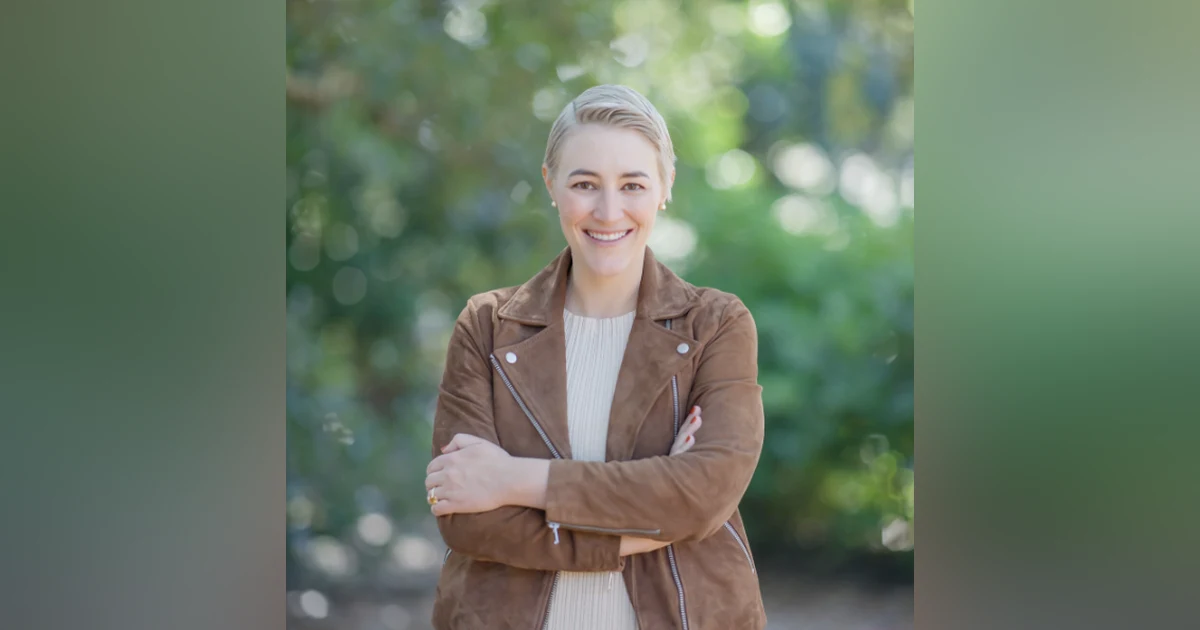
Anna leads the Women's Suffrage National Monument Foundation, the organization authorized by Congress to build the first monument honoring women's history on the National Mall — and she's doing it while living right here in Fairhope and commuting to D.C. In this conversation, Anna and Lenise talk about the fight to get this monument approved, the campaign inviting everyday Americans to submit their own ideas for what it should be, and the women — known and unknown — whose stories deserve a place in stone. It's a conversation about legacy. About the grandmothers who never got their names written down. About what it means for a little girl to walk the National Mall one day and finally see herself.
Learn more or submit your own Monumental Idea at womensmonument.org.
0:00 Lenise Ligon: It's a surprise. My latest episode came to me through an email I was not expecting from a woman I used to work with in the newsroom in Charlotte. Her name is Paige Tatum. She's one of those executive producers who ran a newsroom like it was hers. Sharp, decisive, the kind of woman who made everyone around her better. She left the news, moved to Boston, and found her way to the strategy side. And when she reached out to me about an idea, I knew immediately this was a story I wanted to share.
0:42 She introduced me to Anna Laymon, a woman who lives right here on the Eastern Shore in Fairhope, and commutes to Washington, D.C. to lead some of the most significant monument projects in American history. Anna is the executive director of the Women's Suffrage National Monument Foundation, an organization tasked by Congress with Lenise Ligon: building the first monument on the National Mall dedicated to American women's history. There are 40 monuments on the National Mall. Zero are dedicated to women's history. This conversation moved me. I think it will move you too. So let's get into it. This is Living It Up with Lenise. Close your eyes and think of the many extraordinary women who have shaped your life.
1:27 Can you picture their many faces? I did, and that list grew fast. Images coming to me at lightning speed. At the very top are my mother and grandmother. I learned so much from them about family, strength, community, and love. Their contributions were multidimensional, like all women's. It's those stories, those treasured memories, and that recognition Lenise Ligon: that Anna Laymon is working to bring forward as she leads the effort to build the first monument on the National Mall dedicated to American women's history. I'm curious, what kind of energy does it take to embark on something this big?
2:10 After all, there are countless women's stories that together weave a rich tapestry of our history. How do you even begin to decide which stories are told first? Anna, I want to thank you for taking the time to speak with me. I can imagine how busy you are right now. Truly, it is a pleasure to speak with you through the podcast. Anna Laymon: Okay. Well, first, Lenise, let me say thank you for having me on and for helping us talk about the monument and diving into it. I really always enjoy getting to meet other women on the Eastern Shore and in Baldwin County who are leaders and who are invested in their community, and that's you.
2:50 And so just the chance to meet you today is exciting for me. So thank you for having me on. So Anna Laymon: my name is Anna Laymon, and I live here in Baldwin County, and I have a really great job where I get to have a life here on the Eastern Shore, and then I also get to do this work in Washington, D.C., where I am working to build the first monument on the National Mall dedicated to American women's history. Lenise Ligon: Wow, so that's a dynamic, because you're commuting between Fairhope to D.C. What does it feel like to carry something with such significance from the Gulf Coast to a national level?
3:30 Anna Laymon: I love how you put that, commuting between Fairhope and D.C., because that, I mean, that really is what my life is like. I really love that phrasing. It's really a joy. I mean, it is a special joy to get to have my sweet life here with my children and my family and then to also get to continue forward in this thing that I'm so passionate about, which is women's history and women's Anna Laymon: representation and women's leadership. And so to be able to do both and have both — I was born and raised in Tennessee, so for here, I am an outsider, right?
4:10 I am not from Daphne. I am not from the Eastern Shore. I am from the South, but, you know, it's six hours away. That's not close enough, right? So getting to call Alabama home now is really a privilege for me, and I came down here because I had family here, and we wanted to be back close to family and close to home. My husband was in the Air Force for ten years, and so we moved around a lot. And so that's how we got to Washington, D.C., and we'd lived there for five years and loved it, loved every minute of it. But I was ready to be home, and I was ready to be with family. And so we decided to call Daphne and the Eastern Shore home.
4:54 And so it's really just a joy for me to get to be able to be back in the South and be home, and then also get to commute to Washington, D.C., as you said, and to get to do that work as well Anna Laymon: and do something that for me is really about heart, right? It's about something that I care about deeply. That's a privilege — to get to live in a world where I can have both and be both things. Lenise Ligon: So I can hear your dedication to this cause. I'm curious, was there a moment, a person, a place that made you feel that this was your work to do? Anna Laymon: I love that question. A moment or a place that made me feel like this was my work to do.
5:38 You know, I think that sometimes in life — and Lenise, I'd be curious for you if you feel this way also — I don't always see the road that is ahead of me, but when I look back, it all makes sense. And I feel very much that way about all of it, right? I don't always know how one thing is gonna lead to the next and to the next. But when I look in the rearview mirror, I can Anna Laymon: see how all of those puzzle pieces came together exactly how they were meant to. And I always knew that what I cared about was women's history. That is something I knew. But what I didn't know was how to make a difference and how I could take that thing that I cared so deeply about and do something with it.
6:24 And I think what women especially hear a lot is, you know, "Oh, that thing that you care about, right, women's history — that's never gonna take you anywhere. You need to go to law school. You need to go to medical school..." Whatever it may be, right? And I always knew that there was good to do in the world with this thing that I cared about so much. And I just knew I was gonna figure it out, because I know that there are other people who care about the same thing, like you. And so Anna Laymon: I knew that there was a path, and I was just gonna have to find it, and maybe it's not the path that everybody travels, but I was gonna figure it out.
7:07 And I think when it comes to women's history, you know, Lenise, I'm sure you have these moments in your life as well. I can look back and I can see — you know, I watched the movie A League of Their Own probably three hundred times, right? My grandparents lived in a trailer in East Tennessee in Sequatchie County, and they lived on top of a mountain. And there was nothing but woods and a TV and a VHS player, and they had, like, three movies, and one of those movies was A League of Their Own. I probably saw A League of Their Own three hundred times. Lenise Ligon: I don't know if I would care so deeply about women's history without that one movie.
7:52 Anna Laymon: I think it is a remarkable thing to know that we can put things into the world and have no idea the ripple effects that those things are gonna have, but to believe Anna Laymon: that they're gonna make a difference. And that one movie, for me, led me into a world where I understood that women's stories mattered and that women's stories needed champions, and that I wanted to be one of those champions. Lenise Ligon: That's a great answer, Anna. I do totally relate to dots that are scattered everywhere, and then when you have an opportunity to reflect, seeing how they connect along the way. If only we had that perspective in the moment, because it can be difficult as you're trying to figure it out.
8:37 But once you finally do, it is so refreshing. And I too saw A League of Their Own multiple times — we'll have to compare notes on our favorite characters. But for our listeners tuning in, curious about this, or for those tuning in for the first time, what is the Women's Suffrage Lenise Ligon: National Monument Foundation? Anna Laymon: So the Women's Suffrage National Monument Foundation is the organization that has been tasked by Congress and the President with building a new monument on the National Mall dedicated to American women's history. I think for most folks who have the privilege of visiting Washington, D.C., and getting to walk the National Mall, you have the honor and the joy of getting to see and experience America's stories.
9:18 You know, you walk on the National Mall, and you will see the Washington Monument. You will see the Lincoln Memorial. You'll see Martin Luther King, and you'll get to stand in honor of the Vietnam War and the Vietnam veterans and World War II and the Korean War. It's often called America's front yard, right? And it is the most visited national park in the United States. The National Mall receives thirty-six million annual visitors. That's more visitors than Yosemite, Yellowstone, and Grand Canyon combined.
10:00 Anna Laymon: And so when we think about America's front yard, it truly is the keeper of our national stories. And so we went to the National Mall, and we started to look around, and we realized that of the forty monuments, memorials, and statues on the National Mall, zero are dedicated to American women's history. We have twenty-two dedicated to singular men, ten dedicated to military and war history. The list goes on. There's even a memorial for the Boy Scouts on the National Mall. But of those forty, zero are dedicated to celebrating American women's contributions to our democracy.
10:40 And — you report on the news every day — some problems are very hard to fix. Some problems, the path forward seems unclear at best and at worst impossible. This problem is one that can be fixed. We realized we can Anna Laymon: fix the National Mall. We can make this change, and we can make the tapestry of the stories that we're weaving on the National Mall better and stronger and more full, because the American story — women's history — is part of the American story. And so whose stories we tell on the National Mall, how we tell them — those choices matter.
11:20 And so when we realized that this was something that we could change, we set a course to make that change. So it's taken a lot of years and a lot of work, but we're doing it. We have two pieces of legislation now that authorize us to build this monument and to build it on the National Mall. We have an incredible coalition of supporters across the aisle and across the country who are ready to see this thing happen. And it's just been a remarkable few years. Lenise Ligon: Yeah. You talk about authorization. You managed to get this monument Lenise Ligon: authorized by Congress. I'm curious, what was the authorization process like? Was it tedious?
12:07 Was it difficult? Or did they say, "You know what? You're right"? Anna Laymon: I wish it had been that simple. You know, the thing is, women have had to fight for everything that we have in this democracy. That's the story of the suffrage movement, right? The story of the suffrage movement is the story of women's fight for equality in early America, in an American democracy. It was women and men standing together saying, "Our country will be better and fuller if everyone here has full rights and full privileges and full ability to participate in our democracy." And until 1920 — until the ratification of the 19th Amendment — women did not have the constitutional right to vote.
12:52 And so the 19th Amendment truly changed Anna Laymon: everything for women. Now, that was a fight that some say took 75 years. I think you can say it took a whole lot longer than that. I think you can trace that back to the founding of this country, to that first moment when Abigail Adams wrote John Adams a letter in March of 1776 encouraging him to remember the ladies in this new government that he was forming, right? Those are the seeds of this movement of women standing together and saying, "We are a part of this country, and we are a part of this democracy." Now, it took decades and generations for women to earn the constitutional right to vote and for women to fight that fight for equality in our democracy.
13:34 So it is really no surprise that when we got to Congress, there were folks who were prepared to stand in our way. There just were. We, though, were very, very lucky, because we had this incredible coalition of bipartisan lawmakers Anna Laymon: who stood up and stood next to each other and said, "We are gonna make this happen." And so we had folks in the House of Representatives, we had folks in the Senate, and we had people from both sides of the aisle who would normally — you would never see them working together on a bill, right? You would never see them coming together for a bill, but they came together for this because they understood how much this mattered.
14:17 And we also — Lenise, I'm sure that you know this — but we also are the first organization to have every living first lady serving together as our honorary chairs, and that is a remarkable privilege. From Rosalynn Carter all the way to Mrs. Trump, we truly were blessed to have every living first lady come together and say, "This matters. Women's representation matters. Women's stories matter." And so they came together, and Rosalynn Carter, before she passed, was a part of this group, and we had all six living Anna Laymon: first ladies serving together as our honorary chairs. Now it is all five.
15:07 And the statement that that makes, the signal that that sends — that this monument is for all of us, that this monument is all of our stories — that is an incredible thing. And we did that early on. That was back in 2022 that we brought all of the first ladies together to serve as our honorary chairs, and we did that for a reason. We did that because we knew that we would need their strength with us when we walked into Capitol Hill and said, "Hey, this monument belongs on the National Mall, and we need to make that happen." Because what we knew would happen if we didn't is what happens to women's stories and women's work so often, right, which is that it's pushed to the side. It's made to be a footnote. And we weren't gonna allow women's stories to be a footnote anymore.
15:52 And so with the first ladies standing alongside of Anna Laymon: us, with this incredible coalition of bipartisan lawmakers that included Senator Katie Britt — that included lots of women from the South who stood up and said, "Women deserve space on the National Mall" — because of that, we were able to get these bills passed. Lenise Ligon: You're right, that unity needs to be visible, because it lets people know that this is something that is important and it's something that we all should get on board with. Where does the project stand? Anna Laymon: So that's a great question. So a monument building in Washington, D.C., is — no one will be surprised to hear this — not quick.
16:33 It is a process, but it's a process for a reason. It's a process that's designed to make sure that there's time for public input. It's a process that's designed to be sure that Americans really have the opportunity to speak into what this will be. So where we are right now, we Anna Laymon: have the authorization to build the monument and to build it on the National Mall. In December of 2025, so just a few months ago at this point, we secured two and a half acres on the National Mall.
17:17 So, Lenise, this is gonna be what women deserve, what women have been waiting for, and what women have earned, for sure. We have two and a half acres in the heart of the National Mall, tucked in between the World War II Memorial, the Vietnam Wall, and the Reflecting Pool, and it's gonna be extraordinary. So now that we have our site, we get to launch into the exciting, dynamic chapter of designing this monument. And we have actually just launched a first-of-its-kind program called Monumental Ideas, where we are encouraging every American from age five to ninety-five — whether you're in Citronelle or Chickasaw — it can be anything, right? Get on our website. Tell me Anna Laymon: about your mother. Tell me about your grandmother.
18:06 Tell me what she meant to you and why it matters that her story gets told. If you have ideas of what this could be, of what it could look like — We had this great submission last week. We had someone submit a bench, and she drew a bench on a piece of paper, with one bench in front, and then layers of benches around the side. And what she wrote on it was that she wants to make sure that there's a space at this monument for multi-generational families to take photos, so that you can bring your children, you can bring your grandmother, and everyone has a place to gather and sit for a photo. And I — I'm getting chills just thinking about it. I just thought that was so beautiful, right? What a beautiful idea.
18:46 And this woman, this grandmother who submitted this idea — isn't that an idea a grandmother would think of, right? Because she's thinking Anna Laymon: about every generation. She's thinking about her granddaughter. She's thinking about her sister. She is thinking about bringing her family to this site. And so for the first time in our nation's history — this has never happened before — Americans are invited to submit their ideas for a new monument on the National Mall, and to be a part of building that monument from the ground up, which is gonna take this from just another monument that you might visit on the National Mall to a part of your family's history. Right now, this is a family heirloom.
19:26 This is something that you sat down and were a part of creating. And so if you can, get with your daughter, get with your sister, get with your son, because this history is for all of us. Lenise Ligon: What struck me about the Monumental Ideas campaign is what Anna said — that they're not just making history with what they build. They're determined to make history with how they build it. Public input in monument design essentially never happened. This Lenise Ligon: foundation is choosing to be different. And if you want to be a part of it, you can submit your ideas right now at womensmonument.org.
20:10 I'll be sure to put that link in the show notes. Now, back to our conversation. I do want to explore more about the call to action for the ideas, but before we go down that road, I want to pick up on that submission that you received. I'm guessing it's those gems, but I don't want to speak for you. What has surprised you most about this endeavor? Anna Laymon: About the submissions, what surprised me most about this program? Oh, I have a list. I have been blown away by people's creativity. I have been mesmerized by folks' thoughtfulness, and my cup has felt so full seeing and reading the stories that have been submitted.
20:54 When Anna Laymon: we first started this campaign, we thought that we would be getting lots of drawings of suffragists and folks that people would want to see — and we have been getting those, and those are extraordinary. I have also loved seeing the family stories, because there are the suffragists whose names we know — there's Susan B. Anthony and Sojourner Truth, Harriet Tubman, Mary McLeod Bethune — names that even if we don't know a lot about them, might ring some bells, and we might say, "Okay, yeah, we know a little bit about her." And this monument will be for them, and it will celebrate what they did and what they achieved in their leadership. But equally, it will be for the women whose names were never recorded and never written down, because we didn't think to write their names down, because women's history has never mattered all that much.
21:40 But that's changing with this monument. And so the stories and the submissions that we've received about normal, everyday acts of courage and acts of grace that we Anna Laymon: see from women and have seen from women in this country since it has existed — those stories have filled my cup in a way I could not have expected. The quiet dignity of our grandmothers — those stories have been pretty extraordinary. Lenise Ligon: Yeah, that's a great way of saying it — quiet dignity.
22:22 As women, we are innately nurturers, and we don't think to put ourselves on a list. This new generation coined the phrase "pick me," but I think those who came before us — it was more about doing the work so that others could be in the position to even be there in the first place. So I love that you are asking for that public input, which is rare, by the way, to have that in a monument design. What does that say in terms of how this foundation is choosing to do it differently? Anna Laymon: You know, I love how Anna Laymon: you put that.
23:05 With this monument, we know that as we are seeking to honor history, we are also writing history. Lenise Ligon: Mm. Anna Laymon: So the story of how this monument got built will be told one day. It will. And we know that we are carrying a torch that is extraordinarily important. And so for us, we're making history not just with what we're building, but we are determined to make history with how we build it. And we know that women make change differently. Women make change through collective action. That is the story of the suffrage movement.
23:45 The story of the suffrage movement isn't the story of one voice. It's the story of how loud our voices can be when there are millions added together. And so just like the suffragists taught us, when it comes to building this monument, we want a mosaic of voices to build Anna Laymon: it together, in a way that women have always and will continue to make change — and that is by doing things together and doing things through a collective voice. And so, you know — Lenise, you just made a really beautiful point about suffragists that I just want to add to and echo. There are extraordinary quotes and moments from the suffrage movement where you had women fighting for something that they knew they would never live to see.
24:36 You have extraordinary examples of women who stood up and said, "I know that this isn't gonna happen in my lifetime, because I can see how long this fight is going to be. I can see it, but I'm going to do it anyway, because I know that one day my granddaughters will know I was here, and they will know that I stood up when I was asked to stand up." And Anna Laymon: that — the courage that it takes to give your life to something that you know you will not live to see — that's extraordinary. That's extraordinary courage that we now get to honor on our National Mall.
25:17 Lenise Ligon: Absolutely. When you think about this collection of voices, is there a woman from the suffrage movement whose story you think just hasn't been told enough? Anna Laymon: I find that with these women, even the names we know, we actually know so little about them. The suffragists have an extraordinary strength, and their stories are extraordinary. If we think about going back to 1848 and what it took for women to stand together and say, "We deserve more from our country, and Anna Laymon: we are gonna ask for it, and we are gonna fight for it," what that took in 1848 — this is before the Civil War — I mean, what an extraordinary act of courage.
26:12 In July of 1848, you had more than three hundred folks gather together in Seneca Falls, New York, and put down on paper for the first time their demands — their demands for equality, their demands for education, their demands to be seen and represented in their government, including the right to vote. That moment in July of 1848 is usually what folks attribute to be the first moment, the start of the organized suffrage movement. Imagine the courage to do that in 1848. And interestingly enough, that same month and that same year is when the first stone was laid on the Washington Monument Anna Laymon: on the National Mall.
27:06 So the start of the National Mall begins with the Washington Monument, at the exact same moment that folks are gathering in Seneca Falls, New York, to say women deserve to be full participants in our democracy. It is no surprise that women's stories are not included on the National Mall. Women's stories weren't included on the National Mall because women weren't seen as full people. We still were operating under coverture laws in this country. Coverture laws are the laws left over that we brought over as colonies from England. Coverture laws are the laws that say a woman is first the property of her father, and then, when she marries, she becomes the property of her husband.
27:46 In July of 1848, we were still operating under coverture laws. And so as America's art is being imagined, as the National Mall is being imagined, and we're deciding whose stories go there — of course we don't include women's Anna Laymon: stories, because women weren't seen as full people. We weren't seen as deserving of our own stories. But here we sit, right on the eve of America's 250th, with the opportunity to say women have always been here. We have always been contributing to our democracy. We have always been doing the work to make our communities, our towns, and our country better and stronger, and our stories deserve to be told on the National Mall.
28:27 And here we sit on the eve of our 250th, finally able to make that change. Lenise Ligon: Anna mentioned coverture laws, and I want to pause for a second, because it's one of those things that sounds like an ancient word, but it really isn't. Coverture was the legal doctrine that indicated a woman ceased to exist as an independent person the moment she married. Property, her wages, her legal identity — all absorbed by her husband. This was still the law of the land in 1848 when women first gathered to demand the right to vote. That's the Lenise Ligon: world those women were standing up in. So — twenty years from now, and there's a little girl who's standing at the monument, what do you want her to feel?
29:08 Anna Laymon: I want her to feel seen. I want her to feel like her country believes that she matters, and I want her to know that she can be anything and do anything. That is what I hope. And I think about that all the time, Lenise. As we build this monument, that's the thing I think about more than anything. I have a daughter. She's six. Think about what it's gonna be to take her — do you have children? Lenise Ligon: I have two. I have a thirteen-year-old daughter and a nineteen-year-old son. Anna Laymon: And that's perfection, right? Is she soon to be taking her eighth-grade trip to Washington, D.C.? Does her school do that?
29:51 Lenise Ligon: Yes. Anna Laymon: Okay. So that moment, right — Anna Laymon: when we think about your daughter jumping on the bus and driving to Washington, D.C., eighth grade, just like millions of other eighth graders are gonna do, just like I did when I was in eighth grade — they are gonna go to Washington, D.C., the bus is gonna pull up to the National Mall, they're gonna open the doors, they're gonna kick those kids out, and they're gonna say, "Go, and come back in four hours." And right now, she's gonna walk around the National Mall, and she is not going to see herself represented. She is going to see beautiful stories, great stories, important stories — but she's not going to see women's stories. And I wish I could fix this before she takes her eighth-grade trip next year. I can't fix it that quickly, but her children are going to see a different National Mall.
30:40 And I think about that all the time. I think about those little girls, and when they come and visit and see themselves represented because — and we say this a lot — Anna Laymon: as hard as this was to get passed through Congress, I can imagine that in our lifetimes, not only is this going to be the first monument dedicated to American women's history on the National Mall, but it is likely going to be the only one in our lifetimes, right? Because there are so many folks on Capitol Hill who are now going to look at each other and say, "Okay, great, we gave the women one.
31:20 So now there's one. Good, we can check that box." But we know that women are so much more than a box check. We know that we weave a much deeper tapestry than that. And so what we know is that with this monument, with these two and a half acres, we have to make sure and make certain that every little girl who visits the National Mall sees herself in our monument, and we need to make sure that we tell all of our stories so that every little girl visits and sees herself and sees that our Anna Laymon: country cares about who she is and who she will be.
32:15 And so fighting for that space, fighting for that two and a half acres — part of that fight was to make sure that we have the space to tell a big and beautiful story, so that no matter who you are or where you live, you come to Washington, D.C., and you visit our monument, and you feel inspired to go out and continue to make our country better and stronger, 'cause that's what democracy is, right? It's that pursuit of a more perfect union that we are constantly, always, and will forever be in pursuit of. And so what this monument can be and will be is a tribute to our foremothers and a celebration of our foremothers and what they did for us, and I hope an inspiration to every little girl who visits, so that she knows that her country cares about who she is and who she's gonna grow up to be.
33:00 Lenise Ligon: Who was the woman who shaped you? Anna Laymon: You know, that's a beautiful question, and how lucky am I that I can't decide which one to mention? I think that we have to talk about our mothers. We owe so much to our mothers, and they receive so little in return, and that's okay. Women have come to be okay with that. When I think about this monument — we talked about our daughters and bringing our daughters there and standing there with our daughters.
33:40 I have the same dream about bringing my mom and standing there with her, and what that will mean to her. Sorry, I don't mean to be emotional. But it is, right? It is. It's an extraordinary thing that we get to do. Anna Laymon: It's an extraordinary thing that we get to do, and we couldn't do it without them, without our mothers and our grandmothers. Lenise Ligon: And how wonderful that you'll get to share that with your mother and your daughter, and to say that you were part of it. Anna Laymon: Mm-hmm. It's a pretty remarkable thing. Lenise Ligon: Yeah.
34:20 We're in the lightning round phase, but don't be afraid — this is the fun part. It's just basically quick-fire questions, and I'm going to give you a statement or a sentence, and I would like for you to finish it. Are you ready? Anna Laymon: I'm ready. I'm excited. Lenise Ligon: A woman's voice belongs in history when... Anna Laymon: She has something to say. Lenise Ligon: If you could add one woman to the National Mall tomorrow, who would it be? Anna Laymon: One woman. You know who jumped into my mind Anna Laymon: immediately — Ida B. Wells.
35:04 Lenise Ligon: Book or a film — what piece of art about the women's history movement should everyone experience? Anna Laymon: A League of Their Own. I mean, that's not the women's suffrage movement, but that's women's history. We have to say A League of Their Own. We must. Lenise Ligon: I'm fine with that answer. We must. Anna Laymon: I love it. Lenise Ligon: What's a phrase or a belief that keeps you going when the work feels hard? Anna Laymon: Ugh. Can I show you? I mean — listen, I have this sitting right here on my desk. Lenise Ligon: Oh.
35:44 Anna Laymon: And then I will describe it, 'cause I know that this is an audio podcast. So there are two phrases. I have a piece of carved wood, carved from a woodworking shop in Silver Hill, maybe three inches by three inches, and it has two sides to it. On one side, it says, "Miracles can happen." Someone I really admire said this to me when we were fighting to get the legislation passed to put this monument on the National Mall Anna Laymon: , when it felt impossible. There was one senator who was determined to not let this happen, and it felt like a mountain we were never gonna climb.
36:24 And when this person said, "Miracles can happen," I wrote it on a sticky note, put it on my computer, and said it to myself every day — "Miracles can happen." I needed to believe in that miracle in order to be foolish enough to keep moving forward with what it took to make this happen. But we did believe, and that miracle did happen. And then on the other side of this little piece of wood is carved the four words that were said when the bill passed the Senate: "This bill has passed" — which beautifully was said by Senator Tina Smith, who was the one sitting at the dais right there Anna Laymon: on the Senate floor.
37:04 The senators take turns wielding the gavel, and it just so happened that there was a woman behind the desk in that moment. So I keep this on my desk to remind myself that we can do hard things and that miracles can happen. Lenise Ligon: Every day. Anna Laymon: Every day. Lenise Ligon: Last question. For someone listening to this episode, once they've finished hearing it, what do you want them to do? Anna Laymon: I want them to visit womensmonument.org, and I want them to get inspired. I want them to send us their ideas for this monument — their ideas, their inspiration, their stories. And then I want them to submit their ideas and call a woman in their life who they love and tell her that they love her. That is what I want.
37:47 Lenise Ligon: Thank you. Thank you. A woman's voice belongs in history when she has something to say. Anna said that in about two seconds, and I've been Lenise Ligon: thinking about that line ever since. Forty monuments, zero for women — but that's changing. And what's remarkable is that you can be part of it, too. Submit your monumental idea and tell us about your mother, your grandmother, a special friend, the woman who shaped you. Living It Up with Lenise has been a production of myself, Lenise Ligon, and FOX10, with music by Kendall Faust. I am so grateful to Anna for this conversation, and honestly, I'm grateful to Paige.
38:30 She left the newsroom, built a new chapter, and still found her way to put a good story in front of me. That's a woman leaving a mark as well. As always — live boldly, live intentionally. Living it up isn't just a phrase, it's a decision. If this podcast struck a chord with you, or you learned something new, I would love to hear it. Leave a review, share it with a friend you think may benefit from it Lenise Ligon: as well. Until next time.


